

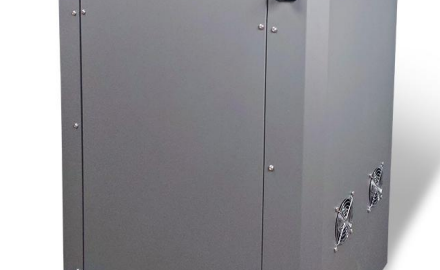

If you walk onto almost any busy shipping dock, e-commerce fulfillment center, or industrial packaging line, you will spot the same recurring headache. Someone is standing there with a utility knife, struggling to resize a cardboard box or trim a sheet of corrugated board. It looks minor, but multiply that task across hundreds of daily orders, and you are looking at a massive drain on labor, time, and material quality.
For decades, businesses tolerated manual cutting or relied on underpowered desktop cutters because industrial-grade solutions were either too expensive, too complex, or overkill for mid-volume operations. That gap in the market is exactly why the X73 Electric Carton Cutting Machine from Eco Pack Machinery has gained traction among logistics managers, packaging engineers, and procurement officers who are done settling for “good enough.”
This isn’t just a piece of hardware with a 1500W motor. It is a direct response to the operational bottlenecks that slow down modern packaging workflows.
The Hidden Costs of Manual and Light-Duty Cutting
Before diving into the X73’s specifications, it is worth unpacking why upgrading your cutting process matters in the first place. In many warehouses, cardboard cutting is treated as a low-skill, low-impact task. In reality, it carries several hidden costs that quietly erode efficiency:
- Labor inefficiency: A skilled packer spending several minutes per box resizing or trimming cardboard is labor poorly spent. Scale that to hundreds of boxes a day, and you are losing hours of productive packing time.
- Inconsistent quality: Manual cuts are rarely straight. Jagged edges make boxes harder to tape, weaken structural integrity, and create a sloppy unboxing experience for the end customer.
- Workplace safety risks: Utility knives are among the most common causes of minor but disruptive injuries in packaging areas. Even experienced staff can slip, leading to lost time and potential liability issues.
- Limited material handling: Standard cutters often struggle with thicker cardboard, taped surfaces, or multi-layer corrugated board. This forces teams to keep multiple tools on hand or outsource custom box fabrication, driving up costs.
The X73 was built to eliminate these friction points in one machine.
X73 at a Glance: Built for Industrial Realities
The X73 is an electric carton cutting machine designed for operations that need consistent, repeatable cutting performance without moving into fully automated CNC systems. Its core specifications reflect a machine meant to live on a busy floor and run reliably:
- Motor power: 1500W geared motor for high torque and continuous operation
- Cutting speed: Up to 12 meters per minute
- Cutting thickness capacity: Up to 10mm (handles standard and heavier corrugated board)
- Cutting width: 500mm (50cm)
- Blade hardness: 55HRB high-hardness blade with approximately 5-year service life
- Debris collection system: Integrated to maintain a clean work area
- Voltage: 110–220V compatibility
- Machine size: 70 × 48 × 100 cm
- Net weight: 168 kg
These numbers matter, but they only tell part of the story. The real value shows up when the machine is integrated into daily packaging operations.
Why the 1500W Geared Motor Changes the Game
Many electric cutters rely on lighter motors that lose torque as resistance increases, especially when cutting thicker cardboard or board with tape and labels. The X73 uses a 1500W geared motor, which is a meaningful step up for industrial environments.
Higher torque means:
- Smoother cutting through dense, multi-layer corrugated board without stalling.
- Consistent feed and blade pressure, which translates to cleaner edges and fewer partial cuts.
- Better endurance during long shifts or back-to-back batch cutting tasks.
For packaging teams processing appliance boxes, industrial equipment cartons, or layered cardboard sheets, this torque difference is often what separates a machine that “works sometimes” from one that performs reliably all day.
Speed Without Sacrificing Control
At 12 meters per minute, the X73 operates at a pace that keeps up with medium- to high-volume packaging lines. But speed alone isn’t the selling point—controlled speed is.
Operators can maintain accuracy even at higher feed rates because the machine’s blade geometry and motor tuning are designed for steady, predictable cutting. This matters when you are resizing boxes to fit products tightly (reducing void fill) or preparing custom inserts and dividers from flat cardboard stock.
In practice, this means fewer wasted sheets, less rework, and a steadier rhythm on the packing table.
Handling Real-World Cardboard: Tape, Labels, and Nails
Packaging departments rarely work with pristine, bare cardboard. Incoming sheets and boxes often carry:
- Reinforced packing tape
- Shipping labels and stickers
- Staples or leftover nails from recycled board
A common complaint about lighter cutters is blade dulling or chipping when encountering these elements. The X73’s high-hardness blade is designed to withstand these realities far better than standard steel blades. While no blade is indestructible, the X73’s blade life expectation (up to five years under normal use) reflects a machine built for actual warehouse conditions—not just demo-room cardboard.
This durability reduces downtime spent changing blades and helps maintain cut quality over long production runs.
Cleaner Workstations, Safer Floors
Cardboard cutting traditionally creates debris: dust, slivers, and offcuts that end up on the floor or the packing table. Beyond cleanliness, this debris can become a minor safety and housekeeping issue in busy facilities.
The X73 integrates a debris collecting system that captures much of this waste at the source. For facilities aiming to maintain 5S standards or simply keep packing stations tidy, this feature removes a small but persistent annoyance. It also reduces time spent sweeping or blowing down tables between shifts.
Cleaner inputs and outputs may seem like a detail, but in high-throughput environments, details compound quickly.
Footprint and Stability: Small Enough to Fit, Heavy Enough to Stay Put
At 168 kg, the X73 is substantially built. That weight isn’t accidental. Heavier machines resist vibration, track straighter, and feel more stable under load—especially when cutting wider boards or applying feed pressure.
Yet its footprint (70 × 48 cm) is compact enough to place on a dedicated packing bench, integrate into a workstation cell, or position near a box assembly area without dominating the floor. For operations balancing space constraints with performance needs, this balance is often a deciding factor.
Where the X73 Fits Best: Use Cases That Make Sense
Not every facility needs the same cutting solution. The X73 tends to deliver the most value in scenarios such as:
- E-commerce fulfillment centers resizing standard boxes to reduce void fill and shipping costs.
- Appliance and HVAC distributors cutting dividers, spacers, or custom inserts from corrugated sheet.
- Manufacturing plants preparing export packaging where box dimensions must match product specs closely.
- Third-party logistics (3PL) providers handling diverse client SKUs that require flexible, on-demand box modification.
- Recycling or repurposing stations where cardboard is cut down for reuse as internal packaging material.
It bridges the gap between “too basic” and “over-engineered,” targeting operations that have outgrown manual methods but don’t require fully automated die-cutting systems.
Comparing the X73 to Manual and Light-Duty Alternatives
To understand the X73’s position in the market, it helps to compare it to the alternatives packaging managers usually consider:
- Utility knives / box cutters
Low cost, but slow, inconsistent, and risky. No scalability. High hidden labor cost.
- Small desktop cutters (typically under 500W)
Better than manual, but often struggle with thicker board, tape, or high volumes. Blades dull faster. Limited width.
- Industrial CNC cutting tables
Extremely capable, but expensive, space-intensive, and often overkill for straight/resizing cuts. Higher learning curve and maintenance complexity.
- X73 Electric Cutting Machine
Focused capability: fast, repeatable straight cutting and resizing of corrugated board, with industrial durability and a manageable footprint.
For many operations, the X73 hits the “sweet spot” where productivity gains justify the investment without overcomplicating the workflow.
Operational ROI: More Than Just Cutting Faster
When evaluating machinery like the X73, procurement teams rightly ask about return on investment. ROI here isn’t only about cutting speed—it’s about the combination of factors that quietly improve daily operations:
- Labor reallocation: Packers spend less time fighting with knives and more time assembling, filling, and sealing boxes.
- Reduced material waste: Cleaner, accurate cuts mean fewer ruined sheets and better use of cardboard stock.
- Lower injury-related downtime: Reducing utility knife usage lowers the probability of minor but disruptive cut injuries.
- Consistency and professionalism: Straighter cuts lead to better-looking packages, which matters for brand perception in direct-to-consumer shipping.
- Long blade life and simpler maintenance: Fewer consumable changes and less troubleshooting keep the machine earning its keep.
Over the course of a year, these improvements often outweigh the upfront cost of the machine—especially in facilities processing thousands of boxes monthly.
Integration Into Existing Packaging Workflows
One of the practical strengths of the X73 is how easily it slots into existing lines. It does not demand a full process overhaul. Typical integration looks like:
- Flat cardboard sheets or oversized boxes arrive at the packing area.
- The operator measures or references the target size needed.
- The sheet or box is fed into the X73, cut to size, and returned to the packing flow.
- Offcuts fall into the debris system; the workstation stays clearer.
- Packing continues with a better-fitting box, less void fill, and fewer tape wraps.
Because the machine is electrically powered but mechanically straightforward, training is minimal. Most operators become comfortable with it quickly, and daily operation becomes routine rather than technical.
Maintenance Reality: What to Expect
Industrial equipment only delivers value if it stays running. The X73’s maintenance profile is intentionally simple:
- Blade inspection and occasional sharpening or replacement (infrequent due to hardness and debris system).
- Keeping the debris collection area emptied and the feed path clear.
- Periodic checks on motor and electrical connections (standard for any powered equipment).
- Lubrication points as outlined in the operation manual.
There are no complex CNC controllers, no delicate sensors array, and no proprietary software dependencies. This keeps long-term ownership costs predictable and reduces reliance on specialized technicians.
Why “Industrial” Still Matters in a World of Compact Tools
The trend toward smaller, lighter, and smarter tools is real—but packaging remains a physically demanding job. Cardboard is tougher than it looks, especially in multi-layer forms, and packaging teams need tools that don’t flinch when the material gets difficult.
The X73 earns its “industrial” label through:
- Substantial build weight and frame stability
- A motor sized for continuous work, not occasional use
- A blade system meant to endure nails, tape, and abrasive surfaces
- A debris system that acknowledges real workshop conditions
Buying industrial-grade equipment is often less about maximum output and more about consistentoutput—day after day, shift after shift.
Eco Pack Machinery’s Perspective: Packaging as a System
At Eco Pack Machinery, the X73 isn’t marketed as a standalone gadget. It’s positioned as part of a broader packaging system that may also include honeycomb paper dispensers, paper cushion machines, and void-fill solutions. The logic is straightforward: packaging efficiency comes from how tools work together, not from any single machine.
A cutter like the X73 pairs naturally with:
- X80 / X90 honeycomb dispensers for creating eco-friendly protective wrap on demand.
- X60 paper cushion machines for converting kraft paper into padding.
- Q20 air column inflators for cushioning fragile items with air pillows.