There’s a moment of truth when a product is unboxed. But before that moment, there’s a journey. A journey across warehouses, through sorting centers, and onto trucks. For decades, the silent, unsung heroes of this journey have been materials that do a job but leave a lasting mark—on our planet.
We’ve always believed that what surrounds a product should be as thoughtfully considered as the product itself. Not just for the “wow” moment of unboxing, but for the integrity of what’s inside and the world that remains outside, long after the box is discarded.
The challenge was clear: How do you cradle something fragile, something valuable, in a material that is inherently strong, yet gentle? The answer, we found, was hiding in plain sight. Paper.
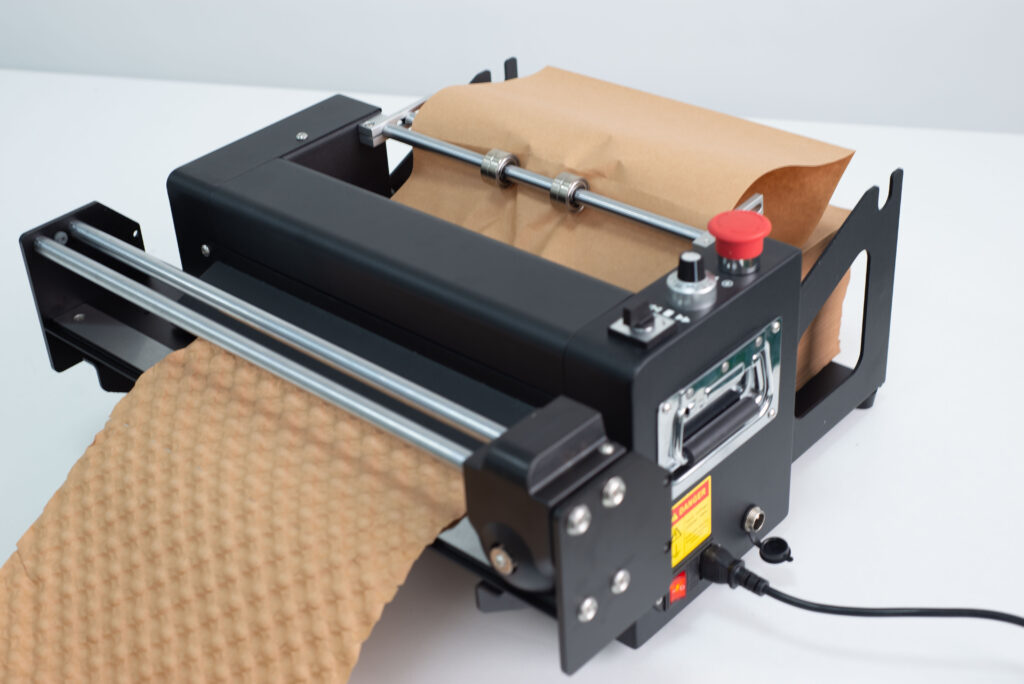
But not just any application. It’s about the structural genius of Honeycomb Paper Sleeves that cocoon items with a surprising, air-cushioned strength. It’s about the efficiency of Paper Cushioning Systems that create a protective nest on-demand, from a simple roll of paper. It’s about the machines—the Pressing, Expanding, and Cutting units—that make this transition not just possible, but practical and scalable. They are the quiet engines behind a quieter kind of packaging.
This isn’t about a sudden revolution. It’s about a sensible evolution.
We work with brands, not just as a supplier, but as a partner in problem-solving. You have a unique product, a specific supply chain, a particular set of challenges. Our role is to listen, to understand the physics of your product’s journey, and then to tailor a solution. Whether it’s adapting one of our existing machines or developing a custom OEM configuration, the goal is singular: to provide protection that makes sense. No over-engineering, just intelligent, purpose-built design.
The result is a simple, profound shift. Out goes the bulky, synthetic, often plastic-based filler. In comes a minimalist, high-performance system that is, at its heart, just paper. Readily recyclable. Seamlessly fitting into the existing paper stream in homes and facilities. Reducing volume, weight, and complexity from the very start.
It’s protection, simplified. It’s sustainability, operationalized.
Because the best packaging isn’t the one that gets noticed. It’s the one that does its job flawlessly and then disappears back into the cycle, leaving nothing behind but a safely delivered product and a lighter footprint.
Perhaps it’s time to look at what stands between your product and its journey. The future of packaging might be quieter than you think.